
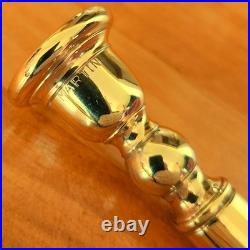
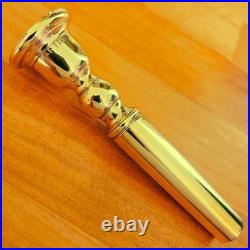
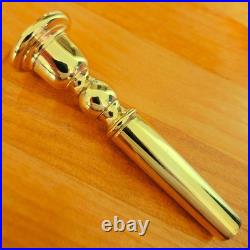
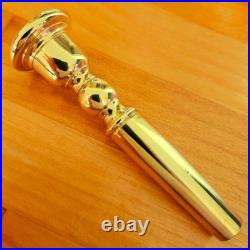
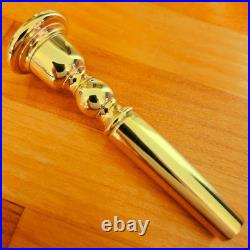
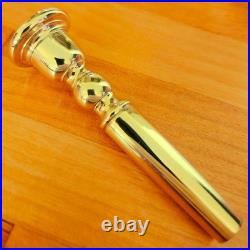
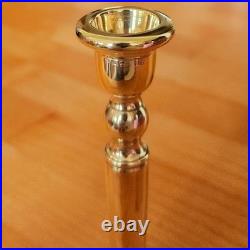
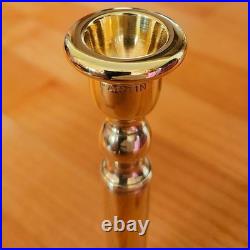
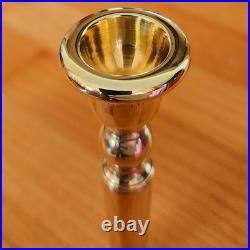
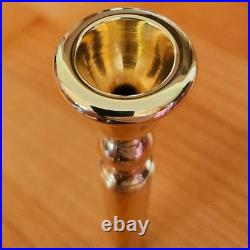
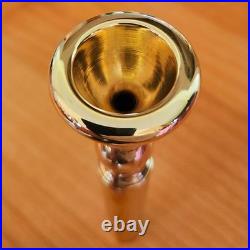
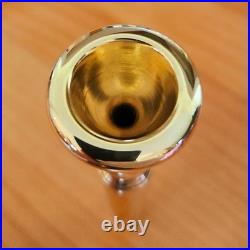
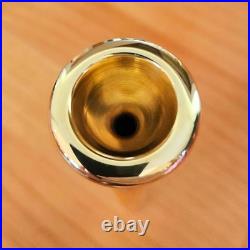
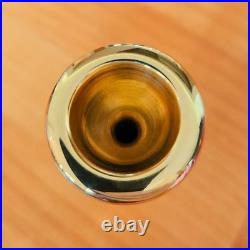
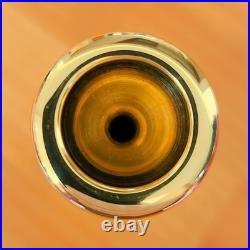
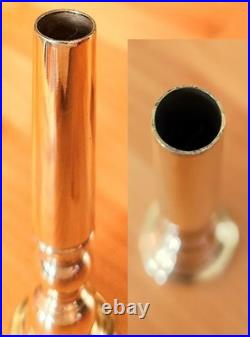
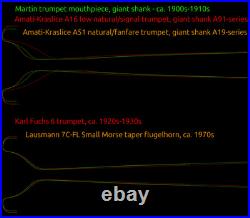
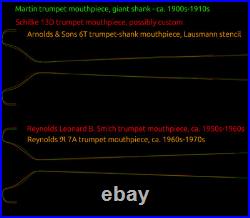
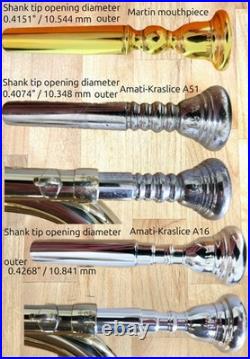
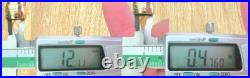
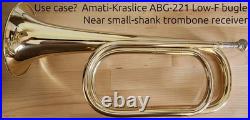
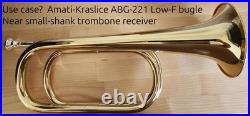
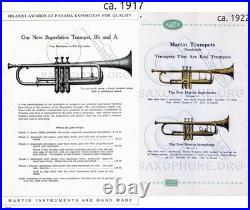
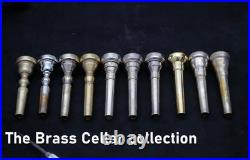

At one point, this giant-shank Martin trumpet mouthpiece was apparently standard, but now it shares a strange niche with models made over 50 years later.. The cup is a deep semi-bucket-type, somewhat resembling the Reynolds 7A or Leonard B. Smith artist model mouthpieces, somewhere between the Schilke 13D and Arnolds & Sons 6T, and [strangely enough] closer to the Karl Fuchs 6 or somewhat shallower 7C-FL from Lausmann. The Fuchs may even have been a Hablawetz or Schmidt Markneukirchen product, if not made at Bohland & Fuchs itself. I don’t know the exact Martin trumpet model it was used with, likely the Superlative, but the stamp on the cup exterior is different than the usual shank-near-collar one used for years. The bulbous, candlestick-esque shank collar was a design trait for the next few decades as well. The strange part is the shank. The tip opening outer diameter is quite large, at. 0.4151 / 10.544 mm compared to VennCAD’s standard. 0.3850 / 9.779 mm. This is more in line with Vincent Bach small trombone shanks. 0.4268″0.4270″ / 10.84110.846 mm. This shank design with a deeper trumpet cup is more in line with European large-shank rotary or natural trumpet mouthpieces, many of mine being from the 1950s-1980s. In particular, I think of the Amati-Kraslice A51 [around a Schilke 20, in the A19 “natural & fanfare trumpet” series] or A16 [very deep, in the A91 alto/tenor-voice “natural & signal trumpet” series]. The Martin isn’t very similar to these pieces, but seems to fill a similar role. This is not recommended for normal B-flat trumpets made since the 1920s or 1930s, as the piece will not seat properly in ordinary receivers. For large-shank receiver horns, even small-shank trombone/euphonium as a novelty, that might be a different story. To preserve the gold plating, I didn’t try this with the Amati-Kraslice ABG-221 low-F bugle for too long, and unfortunately don’t have a photo or much recollection of how it went. That said, I did have photos of the A51 and A16 fitting in the large [tenor trombone-esque] receiver for reference, for a notional, nominal idea of the types of horns that could use this mouthpiece. Per VennCAD, the trumpet standard shank opening outer diameter is around 0.3850 / 9.779 mm. Rotary pieces are around 0.401″0.402″ – 10.18510.211 mm. Amati-Kraslice A51: 0.4074 / 10.348 mm. This 1900s Martin : 0.4151 / 10.544 mm. Amati-Kraslice A54 [standard-issue with the ABG-221]: 0.4199 / 10.665 mm. Another Amati-Kraslice natural trumpet example: 0.4221 / 10.721 mm. Amati-Kraslice A16: 0.4268 / 10.841 mm. Vincent Bach small shank trombone: 0.4268″0.4270″ / 10.84110.846 mm. There are the usual light nicks and microscratches, but this example is in great shape overall, with great gold plating and a round shank opening. Note that shank fit, while it might work in some modern horns, is. Due to the age of the piece and prevalence of difference shank tapers, in addition to manufacturing variance. It’s a neat piece, possibly more for collectors, but still interesting! It could take an extra week in some cases.